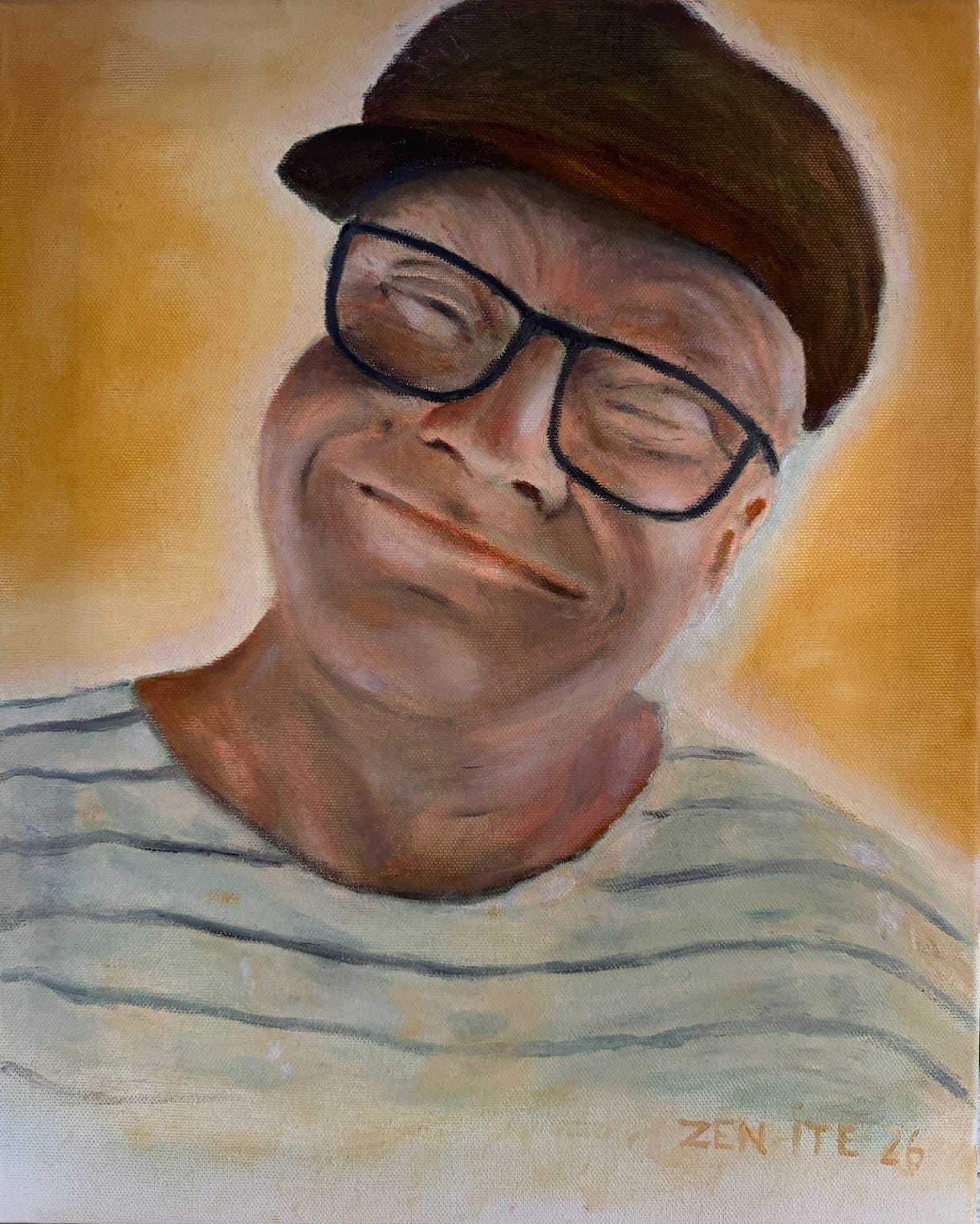
I thought I would make a painting using the layering technique, the way well-known painters did during the Renaissance. Very thin, translucent layers of paint are brushed over an underpainting. Light passes through the layers and is reflected back from beneath them. This creates a unique sense of depth and glow.
Here the first layer was born, which I painted in March 2026. I used a green tone, because it works nicely with skin colour. At this point I had used only two colours, green and yellow. I didn’t want the colours to mix, so I left a small gap between the green and the yellow. This “trick” turned out to be a fun detail when the painting was finished.
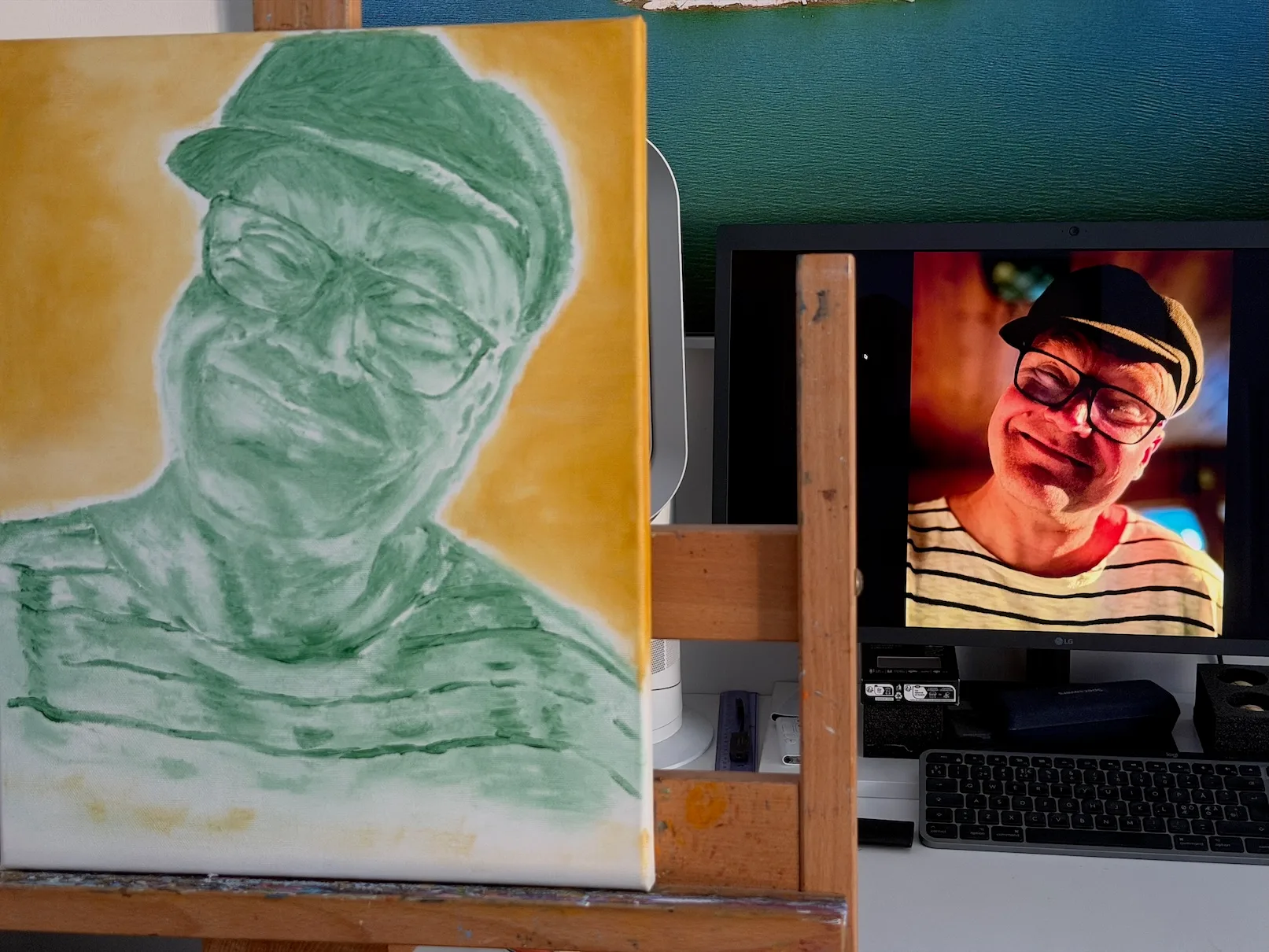
At this stage I discovered the Zorn palette. It is a limited palette named after the artist Anders Zorn, consisting of just four colours: white, yellow ochre, red and black. A month later the oil painting already had skin tones. The underpainting made the work easier, since the lights and shadows were already in place.
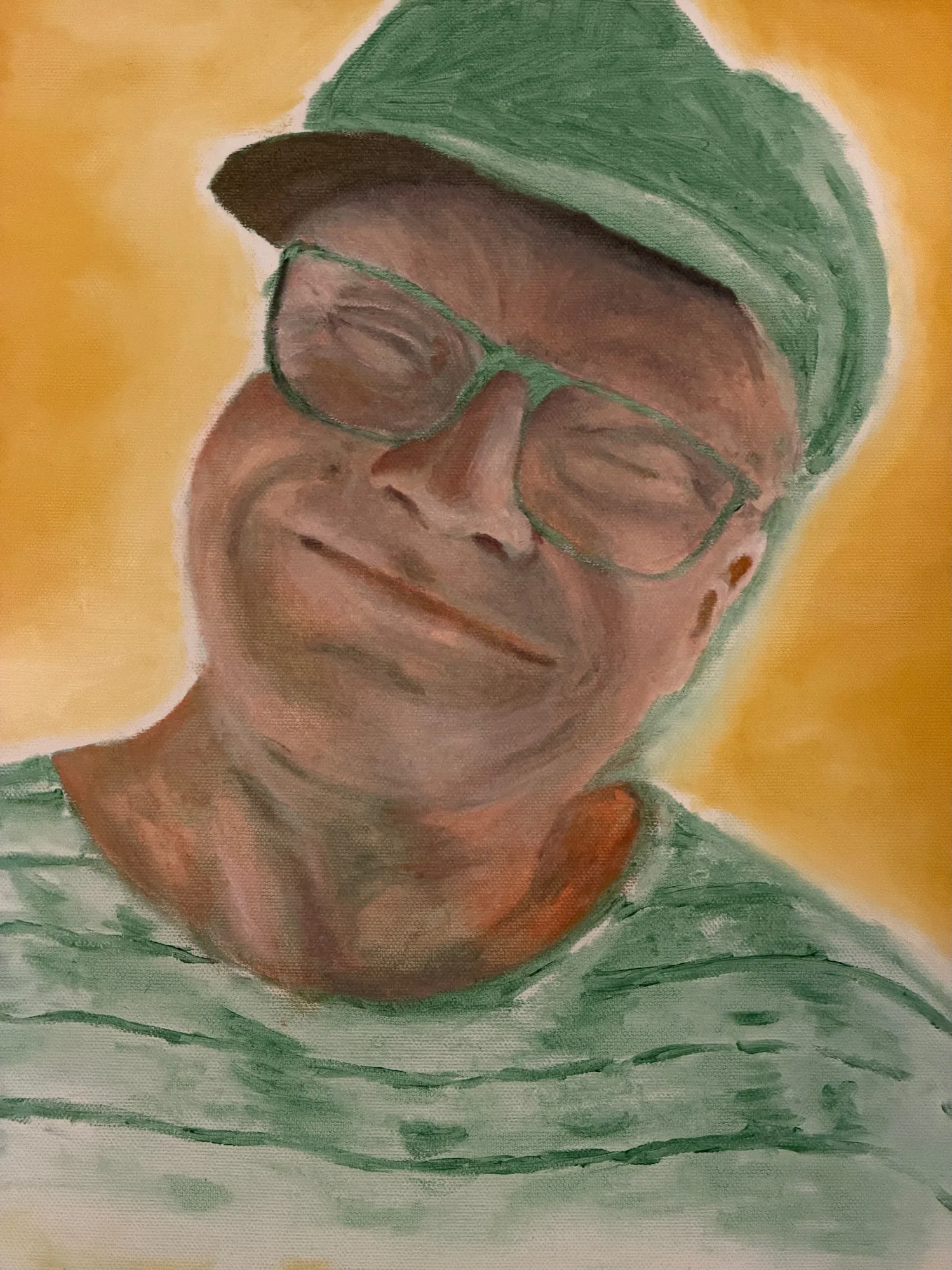
The painting was left to dry for a month, or perhaps a couple. I don’t time unfinished paintings very carefully. What matters is that the paint is fully dry, so the different layers don’t cause flaking. Flaking is a fine and sly effect in itself. It happened when I painted Alders. You can find that painting here.
In the image below, a new layer of paint has been added. The green underpainting still shows in places. I first painted the sides of the glasses black, since they are glossy black plastic. I quickly noticed the black was far too strong, so I brushed white over it. When painting in layers, you have to be careful that no area pops out of the picture, and equally that the picture doesn’t become an evenly thick surface where nothing stands out.
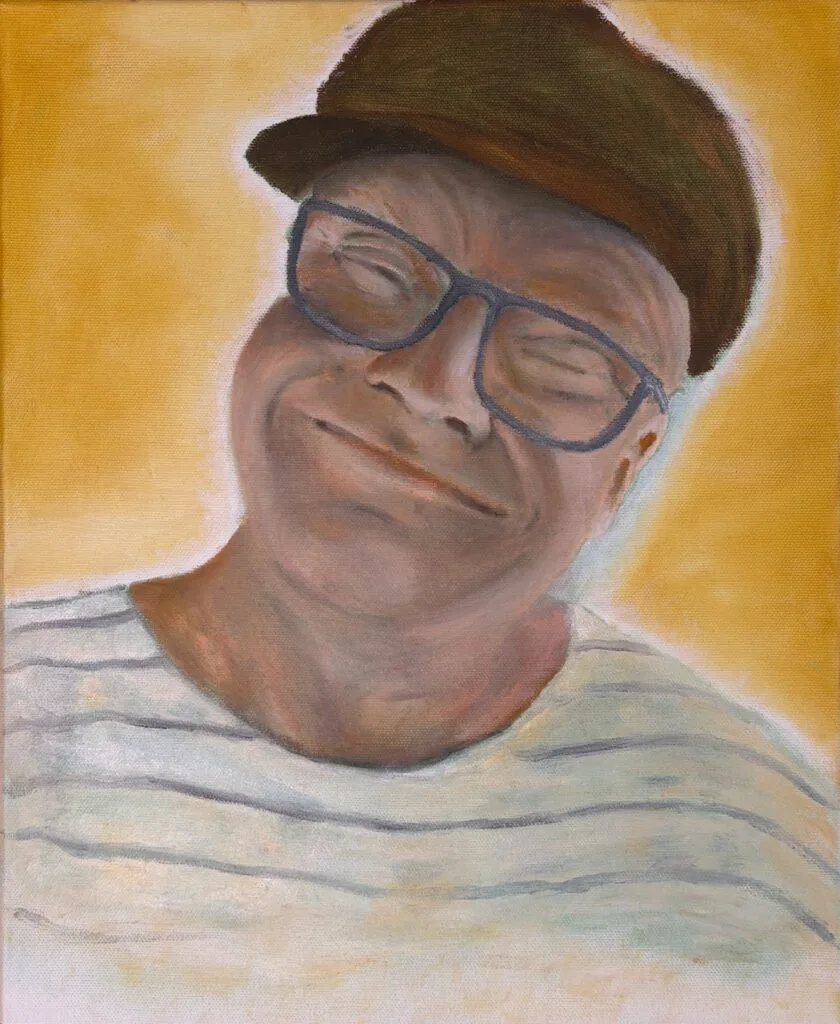
In the image below, the painting is finally finished. I could keep working on it and polishing it for ages, but I don’t feel the need to take it any further. The gap I left between the green and yellow turned into a fun glow of light behind me in the finished painting.
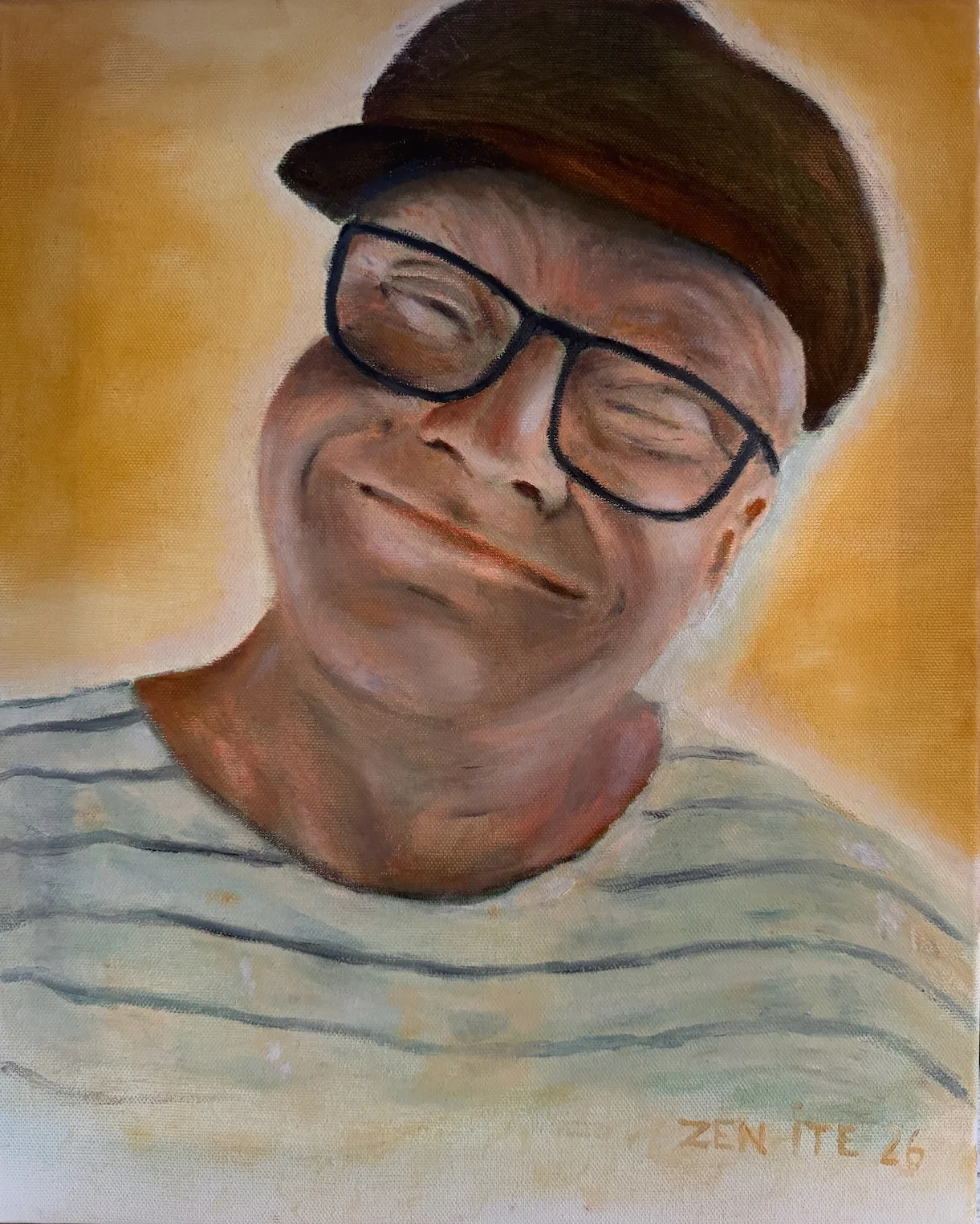
As always, the artist’s signature is once again “Se itte” (himself). During this painting, the signature changed to “Zen itte” (Zen himself) thanks to the meditative painting style. It reminds me once more that painting doesn’t need to be serious, and that a painter’s mood needn’t be solemn.
Leave a Reply